COLLECTION - Service Manuals
23 manuals available for download
COLLECTION offers a comprehensive archive of photography documentation spanning classic cameras, repair techniques, and optical principles. Our curated collection includes detailed service manuals, repair guides, and workshop materials—both vintage treatises and modern technical references—available as immediate PDF downloads. Whether you're seeking troubleshooting guidance for camera maintenance, a parts list for restoration work, or an owner's manual for historical equipment, COLLECTION delivers the technical resources photographers and technicians need. Browse our 23 documents covering everything from elementary photography instruction to professional repair methodology and optics fundamentals.
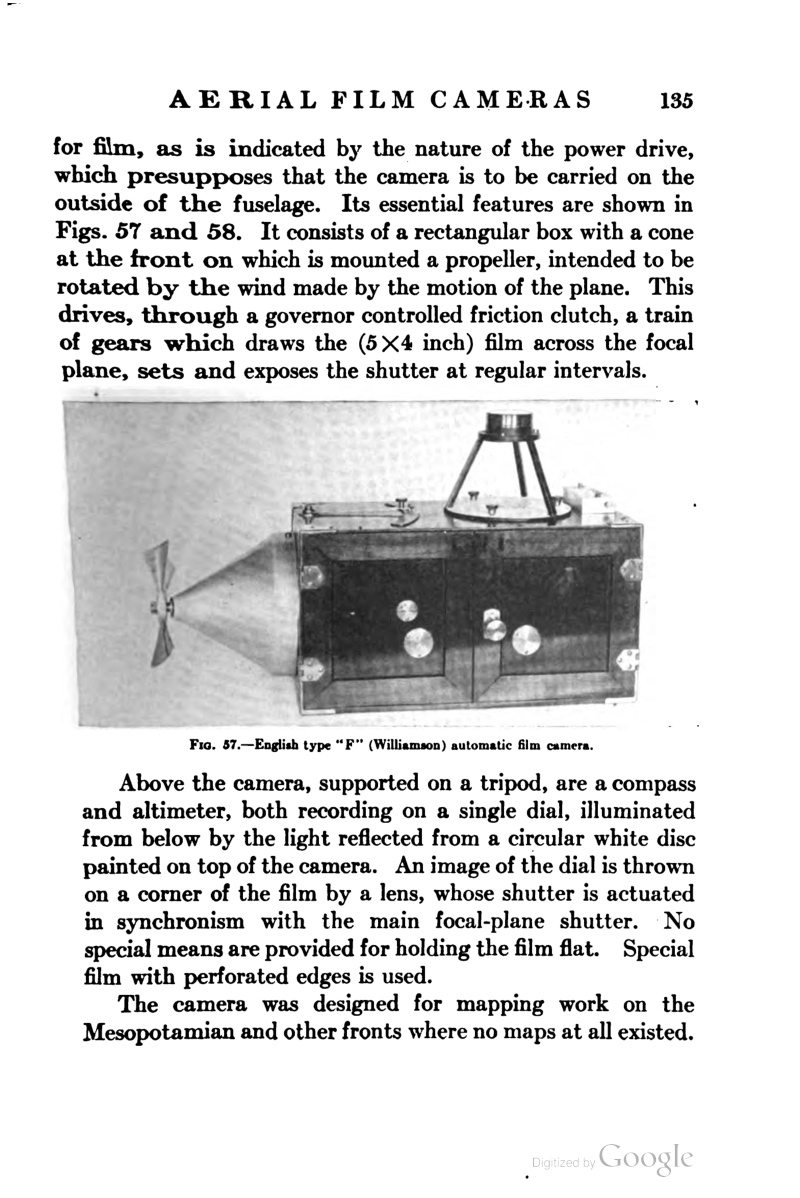
Airplane Photography - Techniques and Applications
Airplane Photography is a comprehensive 408-page technical reference covering aerial photography as applied science, published by J. B. Lippincott Company in 1920. This illustrated work presents 33 chapters organized into seven parts and features 208 technical figures throughout. The manual begins with foundational theory, explaining the airplane as a camera platform and core principles of aerial photographic practice. Extensive chapters follow on camera design and equipment, addressing lenses, shutters, plate-holders, film magazines, hand-held and automatic camera systems, motive power sources, and essential camera auxiliaries. A critical section covers vibration management, camera mountings, and in-plane installation techniques. Image capture fundamentals receive detailed treatment: light distribution in aerial views, emulsion characteristics and selection, filter applications, exposure calculation, printing media, and photographic chemicals. Processing workflows are thoroughly documented, including developing, drying, printing, and enlargement procedures. Specialized applications form the latter portions—spotting and retouching, cartographic mapping, oblique and stereoscopic aerial photography, photo-interpretation methodology, and naval aerial photography. The work concludes with forward-looking discussion of apparatus and method development, technical and pictorial applications, and use in exploration and surveying. A foundational reference for understanding early 20th-century aerial photographic technique and apparatus. Table of Contents: Part I — Introductory: - p.15 Chapter 1: General Survey - p.20 Chapter 2: The Airplane Considered as a Camera Platform Part II — The Airplane Camera: - p.39 Chapter 3: The Camera — General Considerations - p.44 Chapter 4: Lenses for Aerial Photography - p.68 Chapter 5: The Shutter - p.87 Chapter 6: Plate-Holders and Magazines - p.95 Chapter 7: Hand-Held Cameras for Aerial Work - p.102 Chapter 8: Non-Automatic Aerial Plate Cameras - p.116 Chapter 9: Semi-Automatic Aerial Plate Cameras - p.124 Chapter 10: Automatic Aerial Plate Cameras - p.130 Chapter 11: Aerial Film Cameras - p.145 Chapter 12: Motive Power for Aerial Cameras - p.163 Chapter 13: Camera Auxiliaries Part III — Camera Suspension and Installation: - p.179 Chapter 14: Theory and Experimental Study of Methods of Camera Suspension - p.193 Chapter 15: Practical Camera Mountings - p.208 Chapter 16: Installation of Cameras and Mountings in Planes Part IV — Sensitized Materials and Chemicals: - p.221 Chapter 17: The Distribution of Light, Shade and Color in the Aerial View - p.227 Chapter 18: Characteristics of Photographic Emulsions - p.239 Chapter 19: Filters - p.247 Chapter 20: Exposure of Aerial Negatives - p.252 Chapter 21: Printing Media - p.257 Chapter 22: Photographic Chemicals Part V — Methods of Handling Plates, Films and Papers: - p.267 Chapter 23: The Developing and Drying of Plates and Films - p.279 Chapter 24: Printing and Enlarging Part VI — Practical Problems and Data: - p.291 Chapter 25: Spotting - p.304 Chapter 26: Map Making - p.320 Chapter 27: Oblique Aerial Photography - p.329 Chapter 28: Stereoscopic Aerial Photography - p.351 Chapter 29: The Interpretation of Aerial Photographs - p.368 Chapter 30: Naval Aerial Photography Part VII — The Future of Aerial Photography: - p.383 Chapter 31: Future Developments in Apparatus and Methods - p.388 Chapter 32: Technical and Pictorial Uses - p.401 Chapter 33: Exploration and Mapping
American Photography Magazine - Volume XVI 1922
Complete 1922 annual bound volume of American Photography magazine (Volume XVI), featuring all twelve monthly issues from January through December in one 832-page reference. Published by the American Photographic Publishing Company in Boston under the editorial direction of Frank Roy Fraprie, M.Sc.Chem., F.R.P.S. This volume represents the established authority in early 20th-century photographic practice, drawing on the heritage of several foundational American photographic publications: Anthony's Photographic Bulletin (1870), The Photographic Times (1871), American Amateur Photographer (1889), Camera Notes (1897), Photographic Topics (1892), and Photo-Craft (1918). The twelve issues deliver comprehensive technical and artistic guidance across the full spectrum of 1922 photographic practice: darkroom chemistry including developer formulations, alkalis, chromium salts, and bromide and platinum processes; camera operation covering focusing, exposure metering, filter selection, and lens work; portraiture and figure studies with emphasis on background technique and lighting; landscape and pictorial work; specialized fields including stereoscopic, aerial, and motion photography; finishing techniques such as retouching, mounting, and print renovation; exhibition standards and salon practice; and professional business considerations. Contributors include leading photographers and chemists of the era such as E.J. Wall F.C.S., F.R.P.S., John Wallace Gillies, August Krug, C.M. Harris, and accomplished club and salon photographers from across the United States. A complete alphabetical index of principal articles with authors and page references, plus a separate index of all illustrators, makes this annual volume an efficient research tool. Key articles cover Wilson A. Bentley's work on snow crystal photography, technical studies on dry plate emulsions and platinum effects, practical guides to fine focusing and orthochromatic roll-film work, darkroom chemistry fundamentals, portrait lighting and anatomy, and reports from major salons including San Francisco.
 Featured
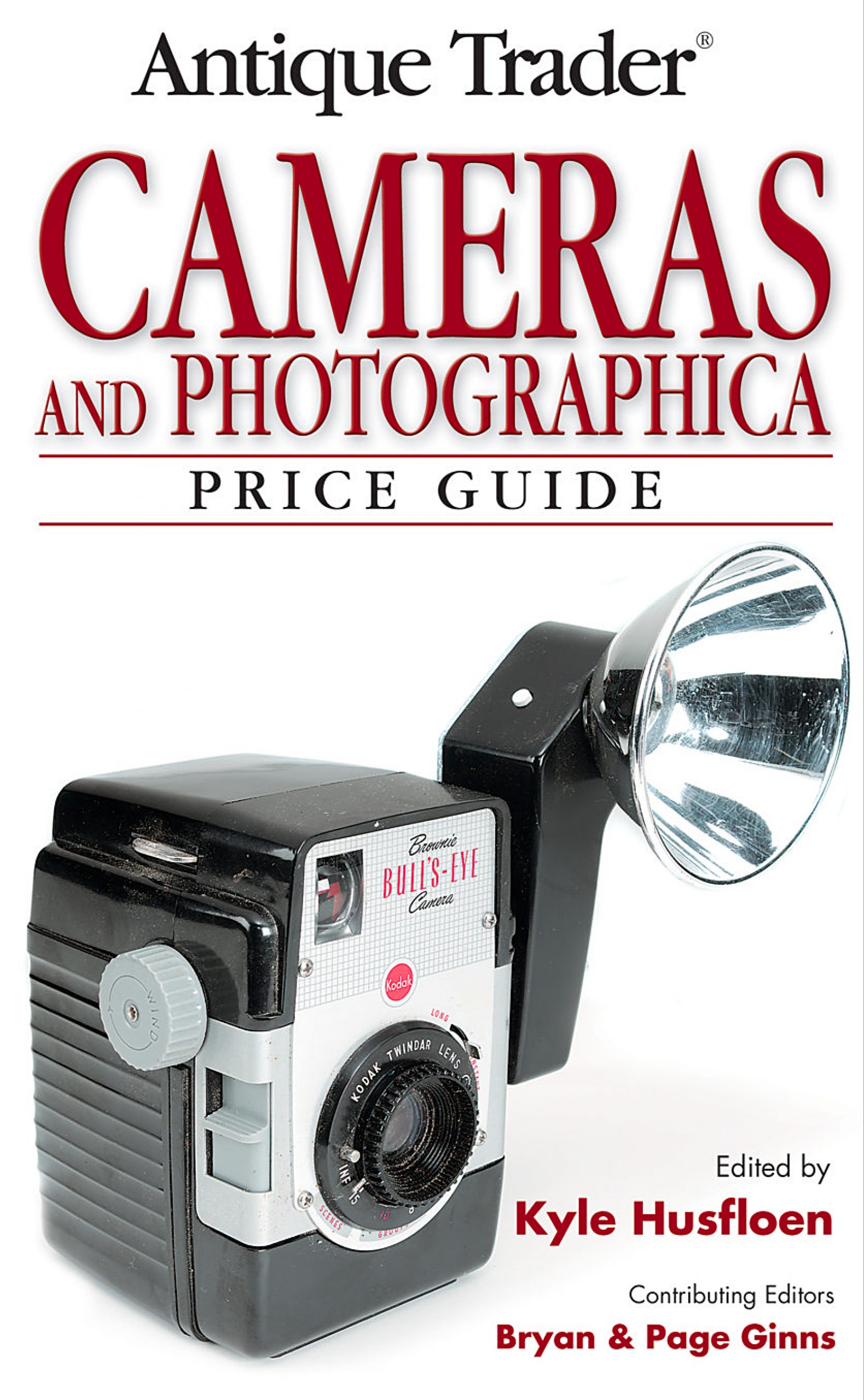
Antique Trader Cameras and Photographica Price Guide
Comprehensive price guide for antique cameras and photographica spanning nearly two centuries of photographic history. Features approximately 1,600 individual listings with over 1,340 photographs plus a specialized 16-page color section. The guide opens with an authoritative historical overview tracing photography's evolution from daguerreotypes of the 1840s through contemporary cameras, followed by expert commentary on collecting practices and market trends. The nine main chapters systematically address photographic equipment and accessories, magic lanterns and optical toys, stereoscopes and stereo viewers, stereoscopic views, and photographic images including ambrotypes, autochromes, cabinet cards, cartes-de-visite, daguerreotypes, and tintypes. Each entry contains detailed descriptions, historical dating, and current market valuations. Supplementary materials include photographic terminology glossary, selected lists of camera manufacturers, and stereoscope makers. An essential reference for collectors, appraisers, dealers, and auction specialists seeking reliable identification and valuation guidance for antique photographic hardware and images.
Art in Photography - European and American Work 1905
Art in Photography — With Selected Examples of European and American Work is a landmark 284-page illustrated album edited by Charles Holme and published by The Studio in London, Paris, and New York in 1905. This foundational portfolio documents the finest pictorialist photography of the early twentieth century through carefully curated reproductions that preserve the tonal quality of original prints. The volume opens with Holme's prefatory essay tracing the artistic progress of photography through the late nineteenth century, highlighting the pioneering Scottish calotypes of D.O. Hill, whose body of 430 portraits created for a single painting demonstrates photography's emerging status as a fine art medium. The collection then unfolds across two complementary sections showcasing the leading photographic artists of Europe and America, featuring work by Alfred Stieglitz, Eduard J. Steichen, Alvin L. Coburn, Clarence H. White, J. Craig Annan, F.H. Evans, Frederick Hollyer, Gertrude Käsebier, Eva Watson-Schütze, and Max Ferrars among others. The British section presents thirty-four plates with landscape, portrait, and genre subjects, while the American section comprises twenty-four plates. Multiple reproductions appear in photogravure and colour, heightening their fidelity to the photographic originals. This album serves as both a historical record of pictorialist achievement and a visual reference for understanding the medium's artistic aspirations during this transitional period.
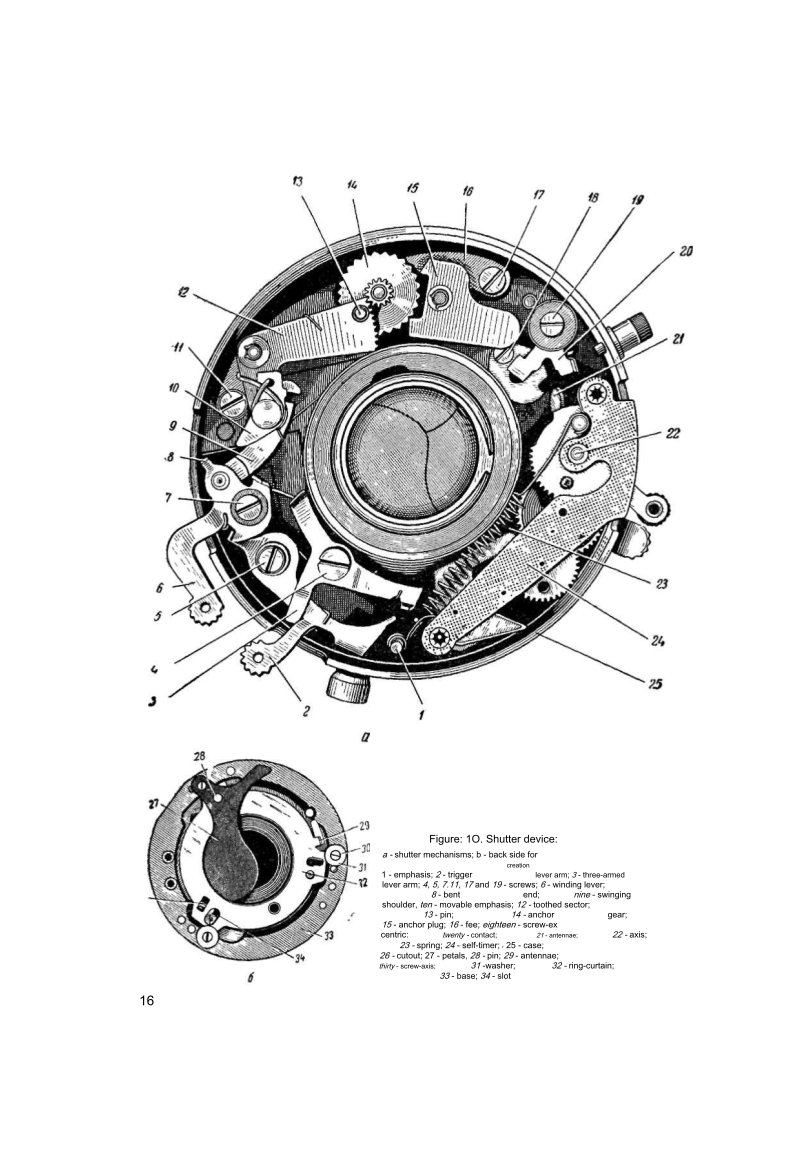
Camera Repair — English Edition
Comprehensive service manual for camera repair and maintenance published in 1964 by Light Industry Publishing House. This practical technical reference serves professional repair technicians, experienced amateur photographers, and organizations managing substantial camera collections. The workshop manual examines the mechanical structure of cameras manufactured by the optomechanical industry during this period. For each unit and mechanism, it describes the precise interaction of components and supplies a systematic troubleshooting guide listing potential malfunctions that occur during camera operation along with repair methods to eliminate them. The manual uses a pedagogical structure that classifies cameras into four groups according to design features, progressing from simple models to the most complex assemblies. Shutter mechanisms receive particular emphasis, especially the Zorkiy model, whose principles apply to most celebrated curtain-shutter cameras of the era. The opening chapter covers workbench setup, standard watchmaking tools, measuring instruments, and specialized equipment required for proper camera repair and adjustment. Throughout the guide, detailed diagrams demonstrate the interaction of parts and provide exhaustive information for diagnosing and correcting malfunctions in each assembly. This resource remains indispensable for developing and refining skills in camera service, maintenance, and repair work.
Camera Repair — Russian Edition
Comprehensive service manual dedicated to the maintenance and repair of photographic apparatus manufactured in the early 1960s. Published in 1964 by Legkaïa Industriya publishers, this workshop reference examines in detail the optical and mechanical mechanisms present in commercial camera models of the period. The guide explores the interaction between various components and systematically describes potential defects and malfunctions that may occur in every assembly and mechanism during normal operation. Addressed to repair technicians, qualified photography enthusiasts, research institutions, and industrial maintenance specialists responsible for servicing large quantities of photographic equipment, this troubleshooting resource draws upon practical hands-on experience and instructional background from teaching repair techniques in specialized training centers. The manual progresses through camera models of increasing complexity, from basic designs to sophisticated instruments, with particular emphasis on the focal plane shutter mechanism—a fundamental design principle widely adopted across professional and commercial photographic apparatus. Each subsequent model receives dedicated attention to its modernized features and refinements. The work provides practical guidance on workshop setup, essential tools, instruments, and specialized equipment necessary for competent camera service and repair operations.
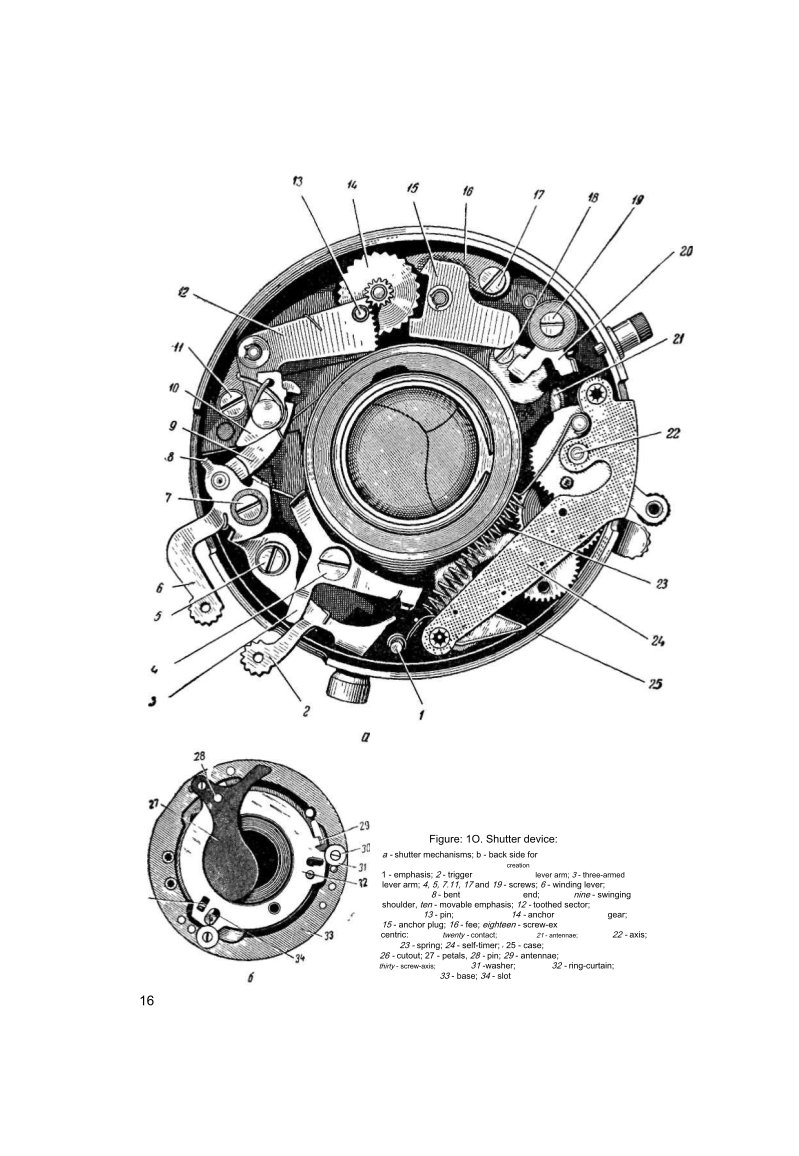
Camera Repairs — English Edition
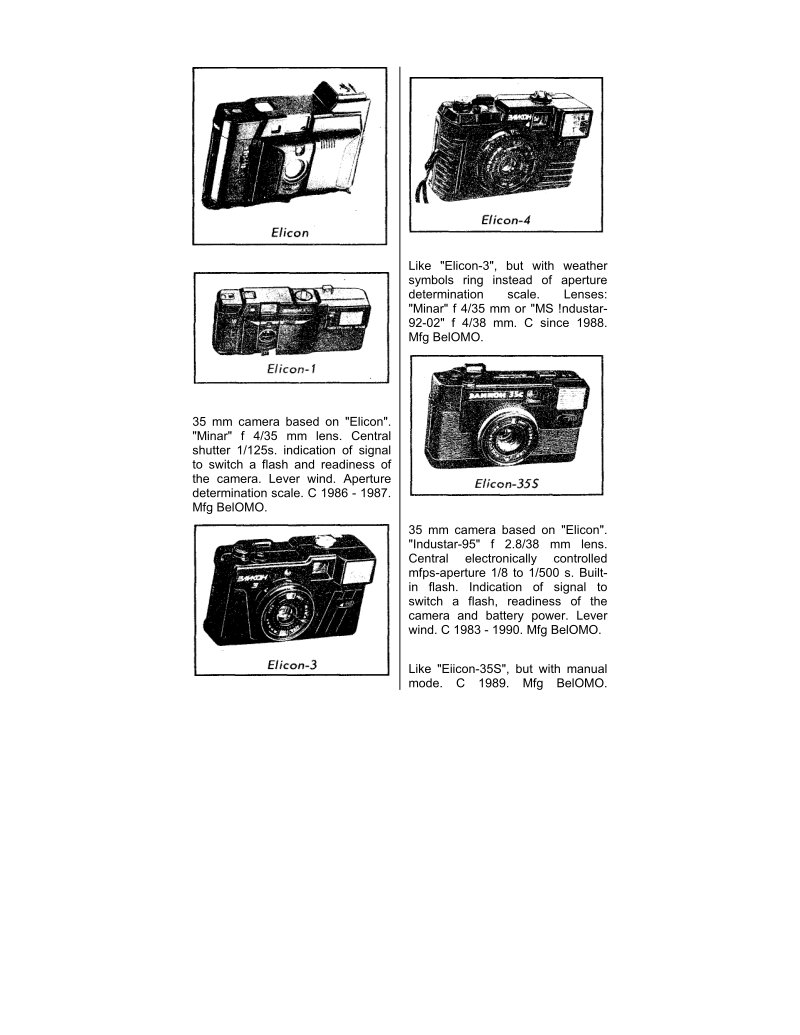
Comprehensive service manual for the repair and maintenance of Soviet-era domestic photographic cameras. This practical workshop guide draws on extensive hands-on experience in camera repair and modernization. It systematically addresses optical and mechanical failures with specific correction procedures for each type of malfunction. The material is organized by camera model, tackling the most complex examples in each category before progressing to simpler variants. Detailed chapters cover Photocor-1, Moscow, Lover, Change, FED, Vigilant, Kiev, and Zenith cameras. For each model, the manual describes the complete unit and mechanism layout, explains how components interact, and provides step-by-step troubleshooting and repair procedures that amateur photographers can follow at home. An introductory section explains optical devices—photographic lenses, diaphragm systems, and rangefinder mechanisms—laying the foundation for understanding the cameras that follow. An appendix includes essential technical information on optical and mechanical work, complete with detailed tool and equipment descriptions. Throughout, the guide uses extensive photographs of parts and assemblies to illustrate proper disassembly and reassembly sequences. Written for amateur photographers looking to handle minor repairs independently, it also covers more involved repairs that require dedicated workshop space and specialized tools. The hands-on approach and clear photography make it a practical resource for anyone seeking to maintain and restore these precision instruments.
Camera Repairs — Russian Edition
Comprehensive practical manual for the repair and maintenance of Soviet photographic cameras, covering the most common mechanical and optical defects found in popular models including Fotokor, Moskva, Liubitel, Smena, FED, Zorkii, Mir, Kiev, and Zenit. This service manual delivers concrete, step-by-step troubleshooting and repair procedures that enable photography enthusiasts to resolve minor malfunctions and perform disassembly and reassembly work at home. The guide explains the operation of mechanisms and optical components, clarifies how parts interact, and demonstrates proper technique through detailed photographic illustrations of assemblies and mechanisms. Each camera model is presented with the most complex variant first, establishing the foundation for understanding simpler designs. The manual also addresses more specialized optico-mechanical work and recommends which repairs benefit from properly equipped workshop facilities. A dedicated section outlines the tools required for repair operations, making this workshop manual an essential reference for anyone maintaining or restoring Soviet cameras.
 Featured
Classic Cameras by Colin Harding
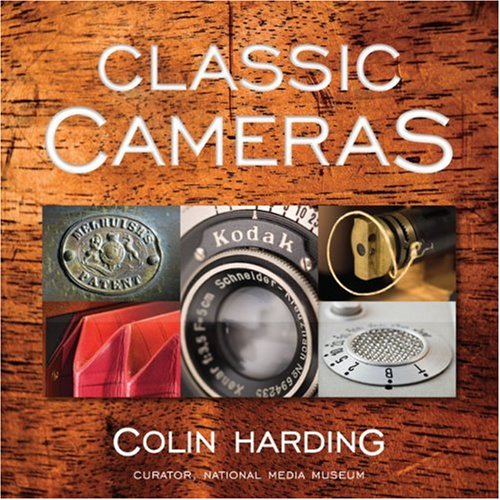
Comprehensive reference work tracing the history and technical evolution of photographic cameras, authored by Colin Harding, Curator at the National Media Museum. The publication presents over 70 iconic camera models from the museum's world-class collections, organized across six chronological and thematic chapters: The Early Years, Wet Plate Cameras, Dry Plates and Roll Film, A New Century, Between the Wars, and Imitation and Innovation. Each apparatus is documented with detailed descriptions, professional photography, and historical context illuminating design innovations and technical significance. The survey encompasses seminal instruments from the camera obscura and daguerreotype era through mechanical masterpieces including the Kodak, Leica, Rolleiflex, and Polaroid Land Camera. High-quality photographs highlight construction details, optical components, and mechanical features of each model. The collection reflects the breadth of photographic technology development, from experimental apparatus to commercially significant designs. Essential resource for camera collectors, photography historians, and technology enthusiasts seeking to understand the evolution of image capture technology from its conceptual origins through the twentieth century. Table of Contents: - Chapter Four: A New Century - The Brownie - Goerz Anschütz Camera - The Mida - Sanderson Cameras - The Ticka - The Aptus - Universal Special B - Soho Tropical Reflex - Vest Pocket Kodak - Queen Mary's Dolls' House Camera - Chapter Five: Between the Wars - TheErmanox - The Jos-Pe - The Rolleiflex - The Leica - Beau Brownie - The Contax - The Retina - Contaflex - Speed Graphic - Polyfoto Camera - Compass Camera - The Minox - Kine Exakta - Purma Special - Super Kodak Six-20 - Gandolfi Prison Camera - Chapter Six: Imitation and Innovation - The Canon IIB - The Contax 5 - The Rectaflex - Stereo Realist - The Witness - Polaroid Land Camera, Model 95 - The Nikon M - Ilford Advocate - The Wrayflex - The Periflex - The Reid - The Leica M3 - The Nikon F - Polaroid Land Automatic 100 - Olympus Pen F - The Instamatic 50 - Canon Pellix - Hasselblad Lunar Surface Camera - The Canon AE-1 - The FotoMan - Reference and Index - Further Information - Suggested Reading - Acknowledgements - Picture Credits - Index
Combat Photography - Signal Corps Historical Report
Combat Photography is a comprehensive 391-page historical report compiled by the US Army Signal Corps (Signal Corps Historical Project, F-2b) documenting the complete development, organization, training, equipment, and field operations of combat photography units throughout World War II. Prepared by the Special Activities Branch, Office of the Chief Signal Officer, Washington, in November 1945 and revised in June 1946, this service manual and operational guide represents the authoritative Signal Corps record of wartime photographic documentation. The report traces combat photography activities from the pre-World War I era through the final months of 1945, covering all theaters of operations including North Africa, Italy, Western Europe, the Pacific, China-Burma-India, and Japan. Chapter I examines the evolution of combat photography training, from the earliest Signal Corps programs through rapid wartime expansion at the Signal Corps Photographic Laboratory and Center. Chapter II details the combat photographic equipment fielded during the war: still cameras (PH-47, PH-324, PH-261, PH-501), motion picture cameras (PH-530), field darkroom setups, optical and chemical accessories, and comparative analysis of Allied and enemy equipment performance. Chapter III describes unit operational procedures including aerial reconnaissance photography, darkroom processing workflows, and geographic coverage by operational theater. Chapters IV through VI document specific combat operations and frontline field experiences across multiple theaters. Chapter VII covers the production workflow and distribution network for combat stills and motion pictures, including detailed production statistics for the European Theater from June 1943 through August 1945. Chapter VIII synthesizes lessons learned and recommendations for future military photographic operations. Eight appendices provide supplementary technical and administrative documentation. Table of Contents: - p.1 Chapter I: Organization and Training for Combat Photography - p.1 A. Activity Prior to World War I - p.6 B. The Pre-War Period - p.11 C. Training for World War II - p.15 D. Activation and Deployment - p.17 E. Criticism - p.21 F. Conclusions - p.26 Chapter II: Combat Photographic Equipment - p.26 A. Early Equipment - p.28 B. Still Photographic Equipment - p.34 C. Motion Picture Photographic Equipment - p.37 D. Accessories and Supplies - p.42 E. Field Laboratories - p.43 F. Field Expedients - p.45 G. Allied and Enemy Equipment - p.47 H. Conclusions - p.52 Chapter III: Operations of Combat Photographic Units - p.52 A. General - p.55 B. Personnel and Processing - p.56 C. Modus Operandi - p.57 D. Combat Coverage by Commercial Cameras - p.58 E. Reports from Theaters of Operations - F. Aerial Photography - p.73 Chapter IV - p.73 A. General - p.76 B. Operations - p.80 C. Hazards of Combat Photography - p.88 Chapter V - p.88 A. General - p.88 B. Making Feature Film in the Pacific - p.110 C. CBI-India Experiences - p.114 D. Adventures in Other Areas - p.152 Chapter VII: Production and Use of Combat Photography - p.152 A. General - p.153 B. Distribution of Combat Stills and Motion Pictures - C. Uses of Combat Photography - p.165 D. Appraisal of Combat Photography - p.167 Chapter VIII: Lessons - p.173 List of Appendices List of Illustrations: - Fig. 1, following p.7: Signal Corps Photographic Laboratory - Fig. 2, following p.9: Training in Combat Photography, 1933 - Fig. 3, following p.11: Training at Signal Corps Photographic Laboratory - Fig. 4, following p.15: Training at Signal Corps Photographic Center - Fig. 5, following p.17: Members of 161st Signal Photographic Company in Training - Fig. 6, following p.28: Camera PH-47-( ) and Components of Camera Equipment PH-104 - Fig. 7a, following p.29: Camera PH-324, as used by Combat Photographers - Fig. 7b, following p.29: Photographic Set PH-261, in use - Fig. 8, following p.31: Photographic repairmen at work - Fig. 9, following p.33: Combat Camera PH-501/PF - Fig. 10a, following p.35: Combat Photographers in Germany - Fig. 10b, following p.35: Combat Photographic Officer in North Africa - Fig. 10c, following p.35: 35mm Motion Picture Camera PH-530 - Fig. 11a, following p.42: Laboratory Darkroom AN/TFW-7, exterior - Fig. 11b, following p.42: Laboratory Darkroom AN/TFW-7, interior - Fig. 12a, following p.43: Darkroom PH-392 - Fig. 12b, following p.43: Darkroom PH-392 in use, Italy - Fig. 13, following p.56: Processing under field conditions - Fig. 14, following p.56: Improvised processing set-up - Fig. 15, following p.56: Improvised laboratory, New Caledonia - Fig. 16, following p.63: Plane used for ground reconnaissance photography - Fig. 17, following p.63: Combat Cameraman making aerial photographs - Fig. 18, following p.77: Combat Cameraman with Fifth Army, Italy - Fig. 19, following p.90: Combat Photographic Officer using Camera PH-47 on New Britain - Fig. 20a, following p.103: Trailer T-19 photographic laboratory, Munda, New Georgia - Fig. 20b, following p.103: Interior of trailer laboratory in use at Bougainville - Fig. 21, following p.113: Injured cameraman in Saipan - Fig. 22a, following p.115: Combat Photographer in Tokyo - Fig. 22b, following p.157: Motion Picture Review Board at Controls of Multiple Film Selector - Fig. 23, following p.160: Tape produced by Multiple Film Selector - Fig. 24, following p.162: Print washing room, photographic laboratory, Pentagon List of Tables and Graphs: - following p.12: Photographic Training, Officers and Enlisted Personnel, 1942-1945 - following p.12: Other Photographic Training - following p.12: Photographic Training, 1942-1945 (Graph) - following p.72: Disposition of Camera Crews, North African Theater of Operations - following p.87: Photographic Combat Coverage of New Britain Operation - following p.124: Total Combat Photography in ETO (Graph) - following p.129: Combined Battalion Distribution of Prints, June 1943 through August 1945 - following p.134: Processing of Negatives in London Still Labs, June 1943 through August 1945 (Graph) - following p.134: Processing of Prints in London Still Labs, June 1943 through August 1945 (Graph) - following p.136: Processing of Negatives in Paris Still Laboratory, November 1944 through August 1945 (Graph) - following p.136: Processing of Prints in Paris Still Laboratory, November 1944 through August 1945 (Graph) - following p.139: Combined Production of Negatives, all 3908th Signal Service Battalion Laboratories, June 1943 through August 1945 (Graph) - following p.139: Combined Production of Prints, all 3908th Signal Service Battalion Laboratories, June 1943 through August 1945 (Graph) - following p.140: Distribution of Motion Picture Film, In Footage to Organizations, January 1941 through August 1945 - following p.140: Footage of Motion Picture Film Negative sent to Washington from ETO (Graph) - following p.141: Motion Picture Production Totals, 3908th Signal Service Battalion (GHQ Pictorial) June 1943 through August 1945 (Graph) - following p.145: Motion Picture Footage Processed in England - following p.147: Motion Picture Footage Processed in France
Encyclopedia Metropolitana: Photography (1853)
Comprehensive historical and technical treatise on photography by Robert Hunt, Professor of Mechanical Science at the Museum of Practical Geology. This foundational work, published in London by John Joseph Griffin and Co in 1853, traces the evolution of photographic science from its earliest discoveries through established practice. Part I documents the history of photographic invention, covering solar ray research, heliography, photogenic drawings, calotype, daguerreotype, and the principal paper-based processes that emerged during photography's formative decades. Part II examines the scientific foundations underlying photographic technique: the chemical action of solar rays on sensitive preparations, daguerreotype theory, photographic registration, thermography, color photography attempts, and optical principles of lenses. Part III provides practical instruction in the execution of photography across all major processes of the era. It addresses paper selection and preparation of sensitive surfaces, detailed manipulation of the daguerreotype and calotype variants, the collodion wet-plate process, albumen printing, creation of positive photographs, operation of the camera obscura, and the construction and use of stereoscopes for three-dimensional viewing. This encyclopedia entry represents an authoritative mid-nineteenth-century reference, reflecting contemporary understanding of photographic chemistry, apparatus design, and darkroom methodology essential to practitioners of the period. Table of Contents: - Part i. history of discoveries in photography - CHAPTER I. Early Researches on the Chemical Action of the Solar Rays .... 3 - CHAPTER II. Heliography. The Process of M. Niepce .... 13 - CHAPTER III. Mr. H. Fox Talbot's Photogenic Drawings, Calotype, &c. .... 19 - Section I. Photogenic Drawing .... 19 - Section II. The Calotype .... 21 - Section III. Improvements in Calotype .... 28 - Section IV. Pictures on Porcelain Tablets .... 29 - Section V. Instantaneous Process .... 32 - CHAPTER IV. Daguerreotype—The Discovery of M. Daguerre .... 35 - Section I. The Original Process of Daguerre .... 35 - Section II. Improvements in Daguerreotype .... 44 - CHAPTER V. The Photographic Processes on Paper of Sir John Herschel .... 51 - Section I. Cyanotype .... 51 - Section II. Chrysotype .... 57 - Section III. Photographic Properties of Mercury .... 60 - Section IV. Ferro-Tartrate of Silver .... 61 - Section V. The Amphitype .... 62 - Section VI. The Colouring Matter of Flowers .... 64 - CHAPTER VI. Processes by the Author and Others .... 72 - Section I. Mr. Ponton's Process. (Bichromate of Potash.) .... 72 - Section II. The Ferrotype .... 76 - Section III. The Catalysotype .... 79 - Section IV. Ferrocyanide of Potassium .... 83 - Section V. The Fluorotype .... 84 - Section VI. Bromide of Silver and Mercurial Vapour .... 85 - Section VII. Positive Photographs by One Process .... 88 - Section VIII. On the Application of the Daguerreotype to Paper .... 91 - Section IX. Salts of Gold as Photographic Agents .... 95 - Section X. Dr. Schafhaeutl's Negative Process .... 96 - Section XI. Dr. Schafhaeutl's Process on Carbonised Plates .... 97 - Section XII. The Influence of Chlorine and Iodine in rendering some kinds of Wood sensitive to Light .... 98 - CHAPTER VII. Photographs on Glass Plates, and Recent Improvements .... 100 - Section I. Precipitates of Silver Salts .... 100 - Section II. Albumen .... 103 - Section III. Collodion .... 103 - CHAPTER VIII. Portraiture by the Daguerreotype .... 104 - CHAPTER IX. General Summary of the History of Photography .... 108 - Part ii. scientific investigations on photography - CHAPTER I. General Remarks on the Solar Agency producing Chemical Change .... 115 - CHAPTER II. Chemical Changes on Sensitive Preparations .... 124 - Section I. Nitrate of Silver .... 124 - Section II. Chloride of Silver .... 124 - Section III. Iodide of Silver .... 130 - Section IV. Bromide of Silver .... 131 - CHAPTER III. The Theory of the Daguerreotype .... 137 - CHAPTER IV. On the Photographic Registration of Philosophical Instruments and the Means of Determining the Variations of Actinic Power, and for Experiments on the Chemical Focus .... 153 - Section I. Photographic Registration .... 153 - Section II. Instruments for Measuring Actinic Variations, &c. .... 157 - The Photographometer .... 157 - The Focimeter .... 159 - The Dynactinometer .... 160 - CHAPTER V. Thermography .... 165 - CHAPTER VI. On the Possibility of Producing Photographs in their Natural Colours .... 172 - CHAPTER VII. On Lenses for the Photographic Camera .... 177 - Part iii. practice of photography - CHAPTER I. Selection of Paper for Photographic Purposes .... 187 - CHAPTER II. On the Apparatus necessary for the Practice of Photography on Paper .... 195 - CHAPTER III. On the Modes of Manipulation adopted in the Preparation of Sensitive Papers .... 205 - Section I. Nitrate of Silver .... 205 - Section II. Chloride of Silver .... 206 - CHAPTER IV. On Fixing the Photographic Pictures .... 211 - CHAPTER V. The Talbotype as now Practised, and its Modifications .... 218 - Section I. Mr. Cundell's Process .... 218 - Section II. Modified Processes .... 224 - Section III. M. Martin's Calotype Process .... 226 - Section IV. Calotype Process on Waxed Paper .... 231 - Section V. M. Flacheron's Process .... 233 - Section VI. Mr. Muller's Process .... 236 - CHAPTER VI. The Daguerreotype .... 237 - Section I. Daguerre's Improved Manipulation .... 237 - Section II. Polishing the Plate .... 241 - Section III. To give the Sensitive Surface to the Plate .... 242 - Section IV. To Develope the Image formed on the Plate .... 249 - Section V. Fixing the Daguerreotype Image .... 251 - Section VI. Simplification of the Daguerreotype .... 254 - CHAPTER VII. The Collodion Process .... 259 - CHAPTER VIII. The Use of Albumen on Glass Plates and on Paper .... 277 - Positive Photographs from Etchings on Glass Plates .... 284 - Albumenized Paper .... 285 - CHAPTER IX. On the Production of Positive Photographs by the use of the Hydriodic Salts .... 288 - CHAPTER X. General Remarks on the Use of the Camera Obscura .... 299 - Section I. Buildings, Statues, Landscapes, and Foliage .... 299 - Section II. Portraits from the Life .... 301 - CHAPTER XI. The Stereoscope .... 303 - Appendix .... 311 - The Photographic Patent Right .... 311 - Correspondence of English and French Weights and Measures .... 314 - Index .... 315
General Treatise on Photography - Fifth Edition
This fifth edition comprehensive treatise on photography stands as a foundational reference for understanding both the practical and scientific dimensions of early photographic technique. The work is structured in two main sections: practical photography and scientific research applications spanning meteorology, micrography, and astronomy. Beginning with historical context, the treatise progresses through photographic chemistry with silver salts and the optical principles governing image formation, before examining photographic apparatus and equipment in detail. Negative processes receive thorough treatment, covering daguerreotype, paper photography, and collodion processes—the dominant techniques of the era. Positive processes are explained alongside specialized appendices addressing advanced photographic applications. A valuable resource for those studying the technical foundations of nineteenth-century photography and the chemical and optical engineering behind historical photographic methods.

Inside the Camera Obscura: Optics and Art
Academic preprint collection (Max Planck Institute for the History of Science, Preprint 333, 2007) exploring the optical camera obscura as a foundational instrument in early modern European science and art. Traces optical theory from Alhazen through Kepler, covering the development of lens and mirror technology and how optical projection shaped 17th-century painting practice. Examines the intersection of optics and artistic technique, with detailed analysis of how painters including Vermeer applied camera obscura principles to achieve their characteristic effects. Essential reference for understanding the historical relationship between optical science and the visual arts during the Renaissance and early modern periods. Table of Contents: Part I – Introducing an Instrument: - p.5 The Optical Camera Obscura I: A Short Exposition — Wolfgang Lefèvre - p.13 The Optical Camera Obscura II: Images and Texts — Norma Wenczel - p.31 Projecting Nature in Early-Modern Europe — Michael John Gorman Part II – Optics: - p.53 Alhazen's Optics in Europe — Abdelhamid I. Sabra - p.59 Playing with Images in a Dark Room: Kepler's Ludi inside the Camera Obscura — Sven Dupré - p.75 Images: Real and Virtual, Projected and Perceived, from Kepler to Dechales — Alan E. Shapiro - p.95 Res Aspectabilis Cujus Forma Luminis Beneficio per Foramen Transparet — Isabelle Pantin - p.105 Clair & Distinct: Seventeenth-Century Conceptualizations of the Quality of Images — Fokko Jan Dijksterhuis Part III – Lenses and Mirrors: - p.117 The Optical Quality of Seventeenth-Century Lenses — Giuseppe Molesini - p.129 The Camera Obscura and the Availability of Seventeenth-Century Optics — Tiemen Cocquyt - p.141 Comments on 17th-Century Lenses and Projection — Klaus Staubermann Part IV – Painting: - p.149 The Camera Obscura as a Model of a New Concept of Mimesis in Seventeenth-Century Painting — Carsten Wirth - p.195 Painting Technique in the Seventeenth Century in Holland and the Possible Use of the Camera Obscura by Vermeer — Karin Groen - p.211 Neutron-Autoradiography of two Paintings by Jan Vermeer in the Gemäldegalerie Berlin — Claudia Laurenze-Landsberg - p.227 Gerrit Dou and the Concave Mirror — Philip Steadman - p.243 Imitation, Optics and Photography: Some Gross Hypotheses — Martin Kemp - p.265 List of Contributors
Library of Amateur Photography Vol. 1: Elementary Photography
Elementary Photography is the opening volume of a foundational instructional series on amateur photography published in 1915. This owner's manual guides you through the essential principles and laws underlying photographic practice, helping you understand how different camera types operate and how light behaves during exposure. The guide walks you through practical techniques for making negatives, achieving proper exposure, and developing plates—skills that remain relevant whether you're picking up the craft for the first time or refining techniques you already know. You'll find detailed chapters on print production methods alongside real-world illustrations from working professional and amateur photographers of the era, showing exactly how photographic practice was carried out in the early 20th century. This workshop manual bridges theory and hands-on application, making it a valuable reference for anyone serious about understanding the fundamentals of the medium. Table of Contents: - Preface .... 7 - Origin of Library .... 11 - Introduction .... 13 - Chapter I: The Meaning of Photography—Its History .... 27 - Chapter II: The Camera—How to Operate It .... 41 - Chapter III: How to Proceed .... 81 - Chapter IV: Beginners' Difficulties .... 97 - Chapter V: Kodaks and Films .... 109 - Chapter VI: Kodaks and Films—Difficulties .... 139 - Chapter VII: Tank Development for Films. No Dark-Room Necessary .... 145 - Chapter VIII: Preparing Chemicals: Developing With Pyro .... 155 - Chapter IX: General Hints on Development .... 165 - Chapter X: Intensifying and Reducing .... 175 - Chapter XI: Appearance of Negatives With Different Exposures .... 181 - Chapter XII: Elementary Tank Development .... 187 - Chapter XIII: Photographic Printing .... 201 - Chapter XIV: Blue Print (Ferro-Prussiate) Sensitizing—Paper, Cloth, Silk, Etc. .... 209 - Chapter XV: Gelatin Printing-Out Paper .... 215 - Chapter XVI: Printing and Toning—Difficulties .... 229 - Chapter XVII: Developing or "Gaslight" Papers—Regular Grades .... 233 - Chapter XVIII: Developing Papers—Difficulties .... 253 - Chapter XIX: Water Tone Platinum Paper .... 255 - Chapter XX: Aristo Gold Paper .... 259 - Chapter XXI: Aristo Carbon Sepia .... 263 - Chapter XXII: Aristo Self-Toning Paper .... 265 - Chapter XXIII: Kallitype Process .... 271 - Chapter XXIV: Elementary Bromide Enlarging .... 279 - Chapter XXV: Trimming and Mounting .... 293 - Chapter XXVI: Supplementary Lenses for Hand Cameras .... 301 - Chapter XXVII: Synopsis of Hand Camera Work .... 309 - Chapter XXVIII: Practical Use of the Camera—Architectural and Landscape Photography for Beginners .... 321 - Chapter XXIX: Elementary Snow Photography .... 337 - Chapter XXX: Elementary Flashlight Photography .... 345 - Chapter XXXI: The Evolution of the Dark-Room From a Bath-Room, by Richard Hines, Jr. .... 355 - Chapter XXXII: My Dark-Room, by Ulysses G. Orr .... 363 - Chapter XXXIII: How the Studies Illustrating This Volume Were Made .... 369
Library of Amateur Photography Vol. 2 (1915)
Comprehensive technical manual from the pioneering era of practical photography, covering the complete workflow of negative making, printing, enlargement and retouching. This 1915 reference from The Camera Publishing Company presents 48 chapters of hands-on instruction spanning dry plate development—both general method and advanced troubleshooting—along with detailed approaches to handling exposure errors, intensification and reduction of negatives, and specialized pyro chemistry for commercial work. The manual covers gaslight paper printing and darkroom procedures, copying techniques using hand or view cameras, bromide and negative enlargement methods, and the skilled craft of negative retouching. Fifty-two practical illustrations demonstrate period equipment, apparatus configurations, and technique execution. A valuable workshop reference for understanding the chemical and optical foundations of early twentieth-century photography practice. Table of Contents: - CHAPTER I. Dry Plate Developing .... 9 - Introduction .... 9 - Brief General Instruction .... 10 - CHAPTER II. Dry Plate Developing—Detail Instruction .... 13 - CHAPTER III. Difficulties—Dry Plate Developing .... 39 - CHAPTER IV. Developing Under-Exposures .... 49 - Difficulties .... 57 - CHAPTER V. General Negative Intensifying .... 63 - Difficulties .... 70 - CHAPTER VI. Local Intensifying .... 73 - Difficulties .... 76 - CHAPTER VII. Developing Over-Exposures .... 81 - CHAPTER VIII. Difficulties—Developing Over-Exposures .... 91 - CHAPTER IX. Advanced Development of Over-Timed Plates .... 99 - CHAPTER X. General Negative Reducing .... 105 - CHAPTER XI. Local Reducing .... 121 - Difficulties .... 127 - CHAPTER XII. Universal Developing .... 131 - Difficulties .... 140 - CHAPTER XIII. Special Pyro Developing for Commercial Photography .... 143 - CHAPTER XIV. Developing or Gaslight Papers—Introduction .... 153 - CHAPTER XV. Printing and Developing—Brief General Instruction .... 157 - CHAPTER XVI. Printing and Developing—Detailed Instruction .... 163 - CHAPTER XVII. Difficulties—Manipulating Gaslight Papers .... 179 - CHAPTER XVIII. Special Printing and Developing of Gaslight Papers .... 185 - CHAPTER XIX. Difficulties—Special Printing and Developing .... 201 - CHAPTER XX. Sepia Tones on Gaslight or Bromide Papers .... 205 - CHAPTER XXI. Post Cards—Gaslight Paper .... 211 - CHAPTER XXII. Copying With Hand or View Camera .... 215 - CHAPTER XXIII. Copying With Hand or View Camera—Detailed Instruction .... 221 - CHAPTER XXIV. Difficulties—Copying .... 233 - CHAPTER XXV. Bromide Enlarging by Daylight or Artificial Light .... 237 - CHAPTER XXVI. Grades of Bromide Paper and Their Use .... 245 - CHAPTER XXVII. Brief Instruction for Bromide Enlarging With the Enlarging Lantern .... 249 - CHAPTER XXVIII. Daylight Enlarging With a Pocket Film Kodak .... 251 - CHAPTER XXIX. Daylight Enlarging With the View or Hand Camera—Detailed Instruction .... 255 - CHAPTER XXX. Home-Made Apparatus Without Condensers .... 265 - CHAPTER XXXI. Bromide Enlarging—Detailed Instruction .... 269 - CHAPTER XXXII. Sepia and Green Toned Bromide Prints .... 285 - Part I—Introduction .... 285 - Part II—Rapid Sepia Tones by the Bleaching and Re-Developing Process .... 287 - Part III—Special Tones on Bromide Paper .... 291 - CHAPTER XXXIII. General Finishing of Enlargements .... 293 - CHAPTER XXXIV. Difficulties—Bromide Enlarging .... 297 - CHAPTER XXXV. Bromide Enlarging Pointers .... 301 - CHAPTER XXXVI. Negative Enlarging—Introduction .... 305 - CHAPTER XXXVII. Negative Enlarging With Large Camera .... 311 - CHAPTER XXXVIII. Negative Enlarging With a Bromide Enlarging Apparatus .... 315 - CHAPTER XXXIX. Difficulties—Negative Enlarging .... 323 - CHAPTER XL. Negative Retouching—Introduction .... 327 - CHAPTER XLI. Negative Retouching—Preparatory Instruction .... 333 - CHAPTER XLII. Negative Retouching—General Explanations .... 347 - CHAPTER XLIII. Negative Retouching—Applying the Lead to the Regular Negative .... 353 - CHAPTER XLIV. Difficulties—Removing Imperfections on Negatives .... 361 - CHAPTER XLV. Negative Retouching—Blending .... 365 - CHAPTER XLVI. Difficulties—Blending .... 375 - CHAPTER XLVII. Retouching Landscape and Architectural Negatives .... 377 - CHAPTER XLVIII. How the Studies Illustrating This Volume Were Made .... 389
Library of Amateur Photography Vol. 3 (1915)
Comprehensive instructional guide from the Library of Amateur Photography series documenting early 20th-century photographic practice. This 1915 volume covers architectural photography, landscape and general view photography, and foundational composition techniques across 27 chapters. The material progresses from preliminary instruction and general principles through specialized subjects including architectural detail work, landscape composition, cloud and sky photography, seascape photography, night photography, floral and animal photography, and natural history documentation. Also addresses technical approaches such as soft-focus and pinhole photography methods. Illustrated throughout with 50 photographic examples and diagrams demonstrating the techniques and visual principles discussed. Table of Contents: - Introduction .... 21 - Chapter I. Architectural Photography Part I—Preliminary Instruction .... 27 - Chapter II. Architectural Photography Part II—General Instruction .... 49 - Chapter III. Architectural Photography Part III—Detailed Instruction .... 67 - Chapter IV. Difficulties—Architectural Photography .... 81 - Chapter V. Landscape and General View Photography Information on Choice of Apparatus and Material .... 87 - Chapter VI. Landscape and General View Photography—Composition .... 105 - Chapter VII. Instruction in Landscape Photography .... 127 - Chapter VIII. Sunlight in Landscapes Rendering Light and Shade .... 133 - Chapter IX. Part I—Figures in Landscapes .... 137 - Chapter IX. Part II—Street Photography .... 143 - Chapter X. Form of Composition .... 149 - Chapter XI. General Talk on Composition and Art .... 155 - Chapter XII. Difficulties—Landscape Photography and Composition .... 167 - Chapter XIII. Cloud Photography .... 175 - Chapter XIV. Snow and Frost Photography .... 191 - Chapter XV. Difficulties—Cloud, Snow and Frost Photography .... 199 - Chapter XVI. Part 1—Seascape Photography .... 203 - Chapter XVI. Part II—Photographing Sea Birds .... 215 - Chapter XVII. Difficulties—Seascape Photography .... 219 - Chapter XVIII. Night Photography .... 221 - Chapter XIX. Difficulties—Night Photography .... 237 - Chapter XX. Floral Photography .... 239 - Chapter XXI. Wild Flowers .... 255 - Chapter XXII. Animal Photography .... 261 - Chapter XXIII. Natural History Photography—Birds, Insects, Animals, Etc. .... 275 - Chapter XXIV. Fuzzy Photography .... 285 - Chapter XXV. Pin-Hole Photography .... 293 - Chapter XXVI. How the Studies Illustrating this Volume were Made .... 307 - Chapter XXVII. How to Understand and Enjoy the Studies Illustrating this Volume .... 317
 Featured
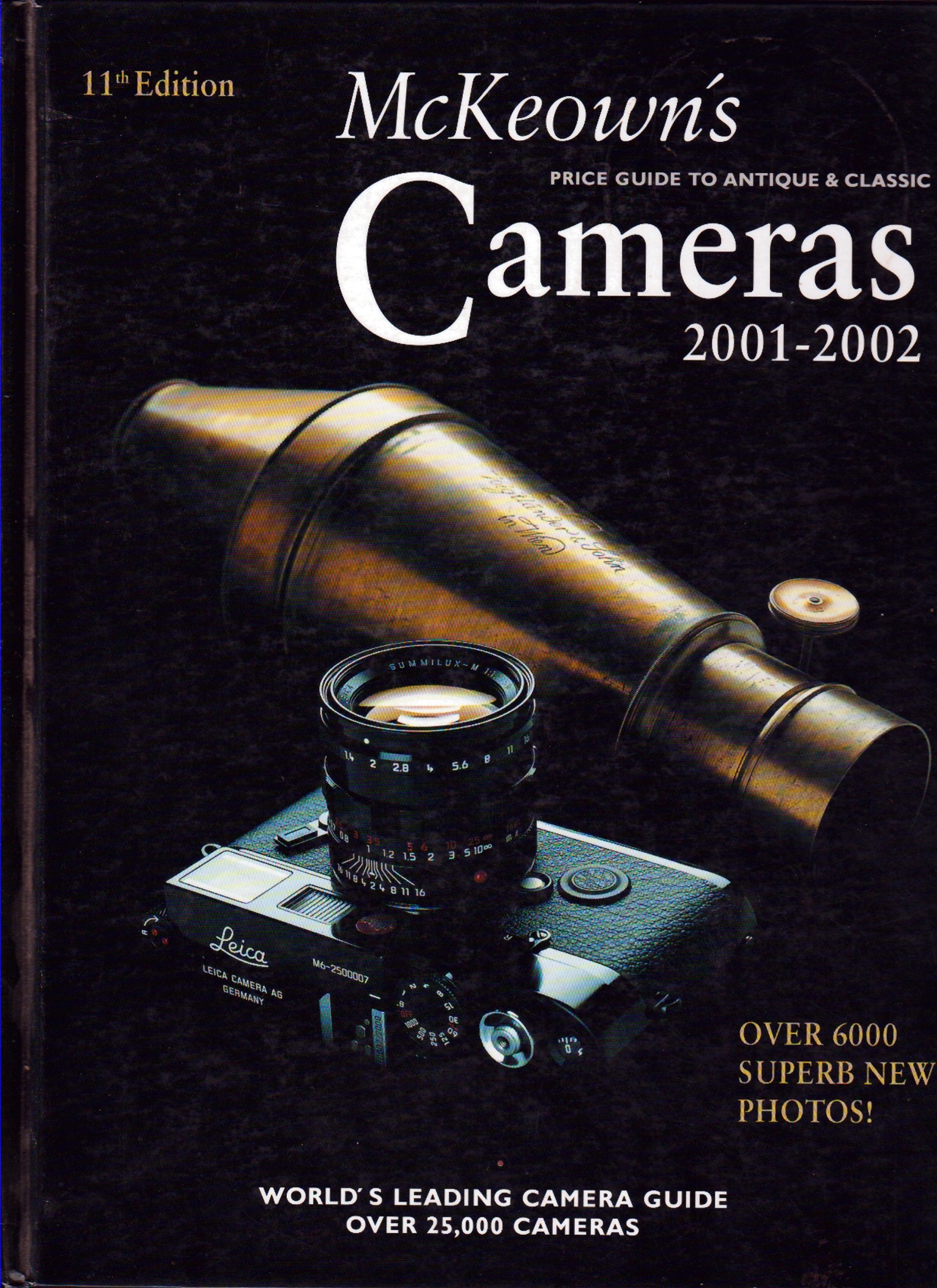
McKeown’s Price guide to antique and classic Cameras 2001-2002
Comprehensive reference guide dedicated to identifying and valuing antique and classic photographic cameras. This eleventh edition (2001-2002) documents over 25,000 camera models with detailed descriptions, photographs, and price estimates. Coverage spans from early daguerreotype cameras through twentieth-century 35mm systems, encompassing medium format cameras, pocket models, and reflex designs. Each entry includes manufacturer information, technical specifications, model variations, and pricing ranges derived from actual market transactions and trade data. The guide employs a standardized condition grading system to assess camera preservation levels from cosmetic to functional states. Introductory sections explain organizational methods, valuation criteria, and factors influencing price variations based on condition and market demand. An essential resource for collectors, conservators, and photography historians seeking accurate identification and current market assessment of their photographic equipment.
Modern Methods of Carbon Printing - Second Edition
A New Treatise on the Modern Methods of Carbon Printing is a comprehensive 261-page technical manual self-published in Bloomington, Illinois in its second edition (1905). Recognized as the most authoritative practical guide of its time on the carbon process, this workshop manual covers the full scope of the technique—from fundamental chemistry and sensitizing solutions through to advanced double-transfer methods and in-studio tissue manufacture. A portrait photograph with handwritten dedication appears on the second page. The work is divided into five sections. Part I establishes core principles, process overview, technical terminology, darkroom setup requirements, pigment tissue composition, bichromate solution preparation, and sensitization and drying procedures. Part II addresses negative preparation, stripping and reversing techniques for plates, photometer design (including a proprietary instrument), printing operations, and exposure theory. Part III details single and double transfer processes, development methodology, techniques for hot-weather printing, acid and alkali treatments, reduction procedures, finishing steps, transfer to glass, canvas and ivory supports, and final mounting. Part IV covers carbon positives produced on glass, window transparencies, lantern slides, toning and intensifying work, negative reproduction, and enlargements using both solar camera and artificial light sources. Part V (Appendix) documents studio manufacture of carbon tissue, pigment selection criteria, coating machinery, and a historical overview of the carbon process including Swan's foundational patent. Table of Contents: Part I: - p.9 Chapter I: The Introduction - p.12 Chapter II: A Brief Recapitulation of the Entire Carbon Process - p.14 Chapter III: Words and Terms used in the Carbon Process - p.20 Chapter IV: The Work Rooms, Arrangement of Light, etc. - p.23 Chapter V: The Carbon or Pigment Tissue — Its Condition and Appearance - p.26 Chapter VI: Bichromate of Potash — Bichromate of Ammonia — Bichromate Poisoning - p.28 Chapter VII: The Bichromate Bath — Formulae for Special Purposes - p.36 Chapter VIII: Practical Notes on Chemical Constituents of the Bichromate Bath - p.39 Chapter IX: The Squeegee, its Construction and Use - p.41 Chapter X: Sensitizing the Tissue — Various Methods - p.48 Chapter XI: Drying the Sensitive Carbon or Pigment Tissue - p.56 Chapter XII: Care of the Sensitive Tissue Part II: - p.61 Chapter I: The Negative — Quality and Style — Prisms and Reversing Mirrors - p.66 Chapter II: Stripping and Reversing Negatives - p.74 Chapter III: The Make-ready or Preparing the Negative for Printing - p.78 Chapter IV: The Photometer — Marton's Photometer - p.82 Chapter V: Printing Operations — Finding the Speed of a Negative - p.87 Chapter VI: The Continuing Action of Light — Theory of the Latent Image Part III: - p.91 Chapter I: The Single Transfer Process - p.97 Chapter II: The Transfer, or Mounting the Exposed Tissue upon Supports - p.106 Chapter III: The Hot Water Supply - p.108 Chapter IV: Development - p.117 Chapter V: Marton's Perfection Developing Tray - p.126 Chapter VI: Development on Heavy Celluloid, Porcelain or Opal Glass - p.129 Chapter VII: Carbon Printing in Hot Weather - p.132 Chapter VIII: The Use of Acids and Alkalies in Development - p.138 Chapter IX: The Reduction of Carbon Pictures — The Alum Bath - p.143 Chapter X: The Double Transfer Process — Waxing Solutions - p.147 Chapter XI: Opal and Ground Glass Temporary Supports - p.150 Chapter XII: Double Transfer Pictures From Polished Glass - p.154 Chapter XIII: Transfer to Dry Collodion Plates - p.157 Chapter XIV: The Wet Process — With Collodion Film - p.161 Chapter XV: The Final Transfer From a Flexible Support - p.166 Chapter XVI: Final Transfer from Glass or Opal Plates - p.170 Chapter XVII: Mounting and Finishing — Enameling Carbon Prints - p.175 Chapter XVIII: Carbon Pictures Upon Ivory and Canvas Part IV: - p.181 Chapter I: Carbon Positives on Glass - p.183 Chapter II: Preparation of Glass Plates for Window Transparencies - p.186 Chapter III: Window Transparencies in Monochrome and Colors - p.190 Chapter IV: The Lantern Slide - p.194 Chapter V: Toning and Intensifying Carbon Pictures - p.198 Chapter VI: Reproduction of Negatives from Carbon Positive Transparencies - p.202 Chapter VII: Carbon Enlargements by Artificial Light and Solar Camera - p.206 Chapter VIII: Failures — Their Cause and Remedy Part V — Appendix: - p.214 Chapter I: Carbon Tissue — Requirements for Studio Manufacture - p.217 Chapter II: The Choice of Pigments or Coloring Matter - p.222 Chapter III: The Manufacture of Carbon Tissue in the Studio - p.225 Chapter IV: The Gelatine Compound — Mixing the Pigments - p.234 Chapter VI: Preparing the Pigment Compounds - p.236 Chapter VII: Coating the Paper With the Pigmented Jelly - p.242 Chapter VIII: A Brief History of the Carbon Process - p.245 Chapter IX: Patent Specification of Swan's Carbon Process - p.257 Chapter X: Improvements of Swan, Johnson, Sawyer and Lambert
Optics for Photographers
Technical reference on geometric optics and lens design for photographers seeking to understand the optical principles behind their equipment. Examines light sources and propagation, the pinhole camera concept, refraction and reflection, simple and centered lens systems, and the full spectrum of optical aberrations—spherical, chromatic, astigmatism, coma, and field curvature. Discusses ray limitation, orthoscopy, image brightness, and depth of focus. Covers optical glass selection, principal lens types including astigmats and anastigmats, reflection and absorption losses in photographic lenses, and telephoto design. Provides working methods for calculating equivalent focal length, relative aperture, angle of view, focal lengths for specific plate sizes, and assessing lens quality. Features 57 technical illustrations. Originally translated from German, this material was serialized in American Photography magazine and serves as a practical workshop reference for understanding lens construction and optical performance. Table of Contents: - Chapter I Sources and Propagation of Light .... 1 - Chapter II The Pinhole Camera .... 5 - Chapter III The Course of the Light Rays on Passing into another Medium .... 15 - Chapter IV Refraction of Light at Several Planes .... 24 - Chapter V Reflection of Light at a Curved Surface .... 32 - Chapter VI The Simple Lens .... 41 - Chapter VII Centered Lens Systems .... 51 - Chapter VIII The Actual Realization of Optical Image Formation .... 65 - A. Spherical Aberration of an Axial Pencil .... 67 - B. Aberrations in the Imaging of a Small Surface near the Axis .... 74 - C. Astigmatism .... 76 - D. Coma .... 82 - E. Curvature of Field .... 84 - Chapter IX Limitation of the Rays .... 87 - Chapter X Orthoscopy .... 94 - Chapter XI The Brightness of the Image .... 98 - Chapter XII Depth of Focus .... 110 - Chapter XIII Color Aberrations and Optical Glass .... 120 - Chapter XIV The Principal Types of Lenses .... 135 - Part I. Astigmats .... 135 - 1. The Simple Collecting Lens .... 135 - 2. The Achromatic Collecting Lens .... 137 - 3. The Aplanat of A. Steinheil as Representative of the Symmetrical Objectives .... 138 - 4. A. Steinheil's Periscope .... 144 - 5. The Portrait Objective of J. Petzval .... 144 - 6. The Antiplanet of A. Steinheil .... 147 - Part II. Anastigmats .... 148 - 1. The Protars of P. Rudolph .... 150 - 2. The Protar Set of P. Rudolph .... 151 - 3. Symmetrical Objectives with Cemented Elements .... 155 - 4. Von Höegh's Anastigmatic Meniscus .... 158 - 5. The Celor and Syntor of E. von Höegh .... 162 - 6. The Symmetrical Objective of the Gaussian Type .... 164 - 7. The Symmetrical Objectives with Cemented and Single Lenses .... 167 - 8. The Unar of P. Rudolph .... 168 - 9. The Unofocal of R. Steinheil .... 169 - 10. The Cooke Lens of H. Dennis Taylor .... 170 - 11. The Triplets with Collecting Cemented Surfaces of H. Harting and P. Rudolph .... 171 - 12. Objectives Corrected for the Secondary Spectrum .... 174 - 13. Conclusion .... 174 - Chapter XV Reflection and Absorption in Photographic Lenses .... 178 - Chapter XVI The Teleobjective .... 184 - Chapter XVII Conclusion .... 194 - A. Determination of Equivalent Focal Length .... 194 - B. Determination of Relative Aperture .... 196 - C. Determination of the Size of the Circle of Illumination and Angle of View .... 197 - D. Determination of the Distance Relation from the Scale of Reduction .... 202 - E. Focal Length for a Given Size of Plate .... 207 - F. Determination of the Quality of Correction of a Lens .... 208 - I. Chemical Focus .... 209 - II. Focal Difference .... 210 - III. The Extent of the Sharp Image .... 211 - G. Technical Defects of the Lens .... 212 - H. The Position of the Ray Filter with Relation to the Lens .... 213
 Featured
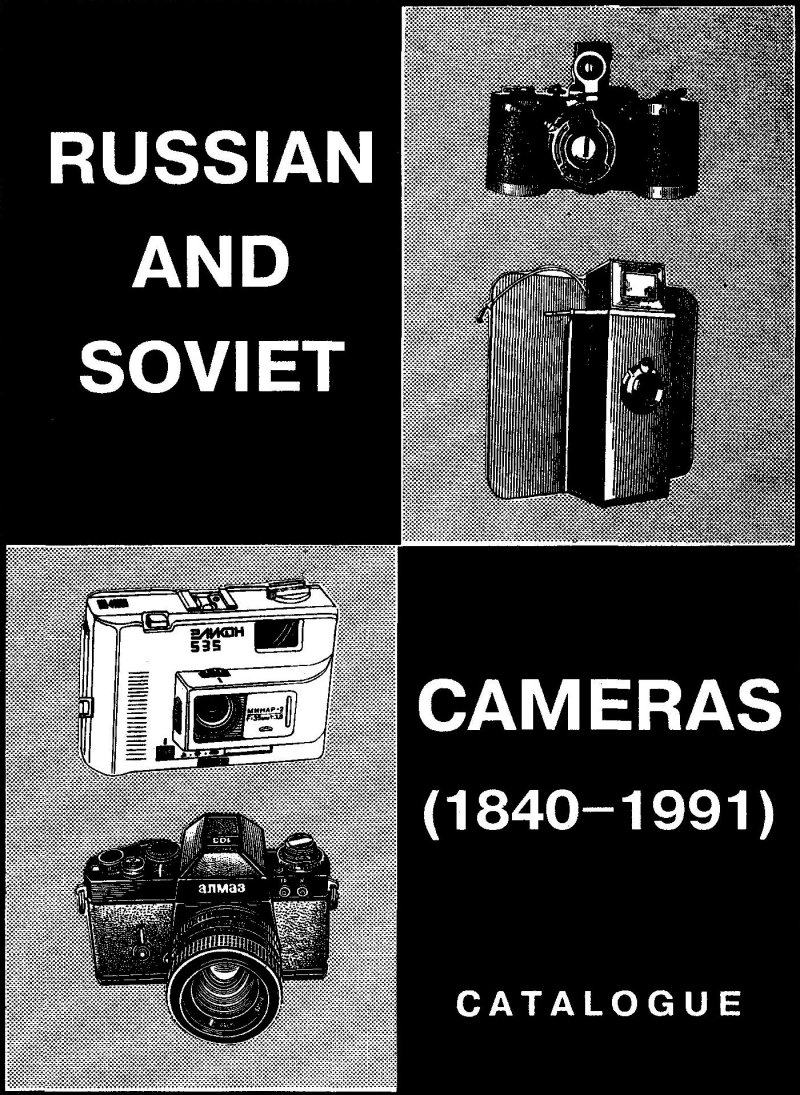
Russian & Soviet Cameras 1840-1991
Comprehensive reference catalogue documenting the evolution of Russian and Soviet camera manufacturing from 1840 through 1991. The publication divides into two distinct historical periods: the Russian era (1840–1914) tracing innovations by Russian entrepreneurs and engineers, and the Soviet era (1929–1991) covering state enterprise industrial production. The first section catalogs general-purpose cameras ranging from early daguerreotype models to advanced reflex designs, alongside specialized equipment built for military reconnaissance, aerial photography, and scientific applications. It thoroughly examines developments in photographic optics and shutter mechanisms across both periods. The second section presents serial production models developed after the Revolution, with detailed technical specifications for each camera including format, capacity, shutter type, and lens characteristics. Illustrated with technical drawings and photographs of representative models, this reference work serves as an essential resource for camera collectors and photography historians seeking insight into technological advancement within an industrial sector across two fundamentally different political and economic systems.

Small Guide to Black and White in Digital Photography
Practical introduction to black and white digital photography that breaks down how digital sensors actually capture and process images. Walks you through photosites, the Bayer matrix, color filters, and microlenses—the hardware side that determines what your camera can record. Then moves into the software techniques: RAW versus JPEG workflow options, desaturation methods, grayscale conversion strategies, and hands-on adjustment using Adobe Photoshop and similar tools. Covers both in-camera approaches (dedicated black and white modes, parametric settings) and post-processing workflows for fine-tuning your monochrome images. Ideal for photographers transitioning to black and white or looking to understand the full pipeline from sensor to finished photograph.
Stereoscopic Photography - Science, Industry and Education
Stereoscopic Photography — Its Application to Science, Industry and Education is a comprehensive 385-page reference manual published by Chapman and Hall in 1935 as the second revised and enlarged edition, expanded by 94 pages from the original 1926 first edition. This authoritative workshop guide covers the full scope of stereoscopic photography theory and practice across twenty-one chapters. The manual examines the physiological basis of stereoscopic vision, the fundamental photographic principles governing stereoscopy, single-lens camera techniques, practical guidance on camera selection and accessories, stereo camera design and operation, viewing systems and optical principles, photographic processes, methods for close-up and wide-angle stereograms, pseudo-stereoscopic techniques, monocular vision relief effects, stereoscopic viewing instruments, and detailed applications in education and scientific research. Specialized sections address stereoscopic microscopy, astronomical observation, radiography, aerial photography, anaglyphic methods, and stereoscopic projection systems. A comprehensive bibliography (p.331) and full index (p.335) enable quick reference throughout the volume. A full-page advertisement on p.384 features the Rolleidoscop and Heidoscop stereo cameras manufactured by Franke & Heidecke—precision instruments equipped with Zeiss Tessar lenses and distributed in Great Britain by Hunter R. F. Ltd., 51 Gray's Inn Road, London W.C.1. Table of Contents: - Chapter I: Introductory - p.4 Chapter II: The Causes of Stereoscopic Vision - p.34 Chapter III: Photographic Principles in Stereoscopy - p.42 Chapter IV: Stereoscopy with a Single Lens Camera - p.60 Chapter V: The Selection of Cameras and Accessories - p.73 Chapter VI: Stereoscopic Cameras - Chapter VII: The Viewing of Stereograms - Chapter VIII: Photographic Processes and Notes - p.159 Chapter IX: Stereoscopic Photography of Small Objects - p.166 Chapter X: The Wide Angle Stereogram - p.171 Chapter XI: Pseudo-Stereoscopic Results - p.178 Chapter XII: Monocular Vision Relief Impressions - p.183 Chapter XIII: Some Stereoscopic Instruments - p.195 Chapter XIV: Stereoscopic Applications and Curiosities - p.213 Chapter XV: Anaglyphs - Chapter XVI: Educational and Scientific Applications - Chapter XVII: Stereoscopy and Microscopy - Chapter XVIII: The Application of Stereoscopy to Astronomy - p.270 Chapter XIX: Stereoscopy and Radiography - p.284 Chapter XX: Stereoscopic Aerial Photography - p.308 Chapter XXI: The Projection of Stereoscopic Pictures - p.331 Bibliography - p.335 Index
The Beginnings of an Amateur Photographer
Foundational instructional guide to amateur photography, featuring a preface by Gaston Tissandier and a historical overview tracing photography's development from its optical origins through the 19th century. The manual covers core optical principles, photographic processes, and practical advice for beginning photographers looking to master the fundamentals. This third revised edition incorporates recent technical advances in the field, making it an essential workshop reference for photographers new to the medium.