ELEKTOR - Service Manuals
5 manuals available for download
ELEKTOR is a trusted source for comprehensive electronics documentation, offering detailed service manuals, repair guides, and technical resources spanning decades of industry expertise. Whether you need a workshop manual for troubleshooting, an owner's manual for setup and operation, or a maintenance guide with parts lists, ELEKTOR's PDF downloads provide the authoritative information technicians and enthusiasts require. From vintage publications to complete technical references, each document delivers the depth and precision necessary for professional repair work and equipment maintenance across diverse electronics applications.
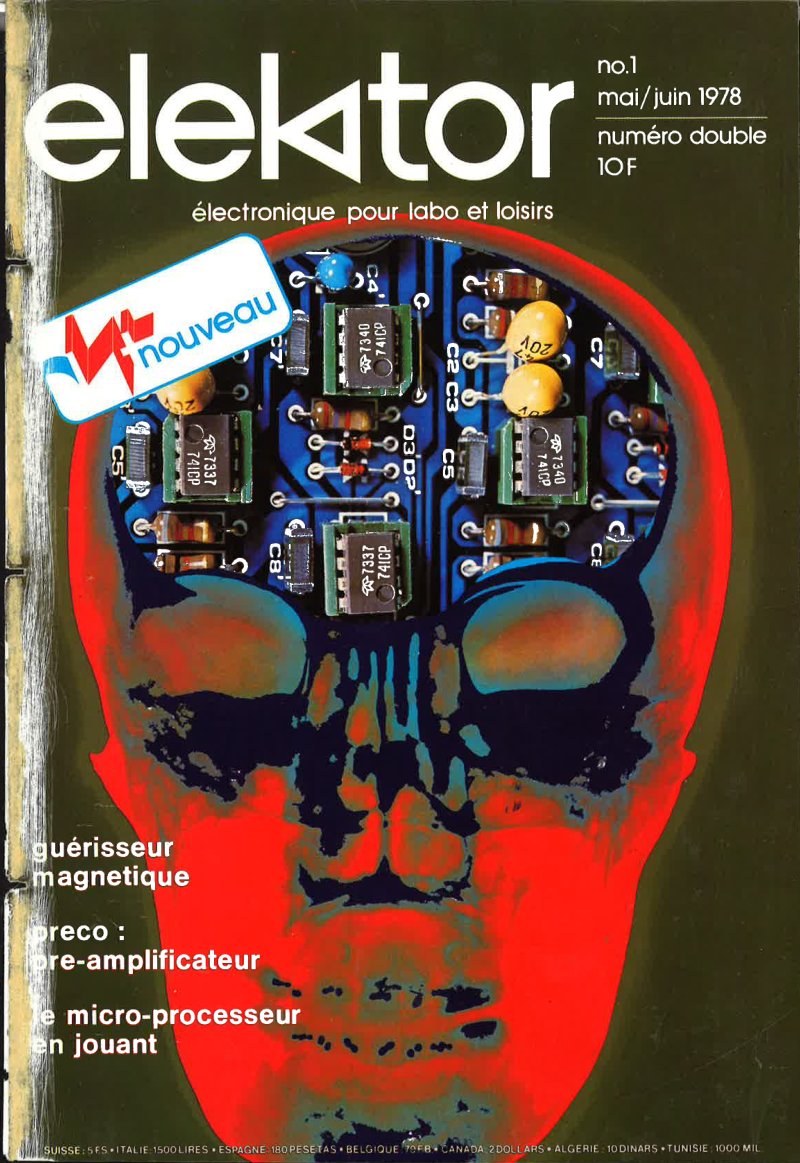
ELEKTOR No. 001 - mai-juin 1978
First issue of Elektor electronics magazine from May–June 1978, launching the publication with practical circuit designs and hands-on projects for electronics enthusiasts. Features detailed technical articles covering microprocessor fundamentals, function generators, shortwave receiver construction, single-sideband receiver design, and automated slide-projector control circuits. Includes a phasing effect circuit, magnetizer project, and educational microprocessor gaming application. Component sourcing section with pricing catalogs from BERIC and Fanatronic distributors lists TTL logic circuits, transistors, diodes, and standard electronic parts. Essential reference for hobbyist builders and laboratory electronics work from the magazine's inaugural edition.
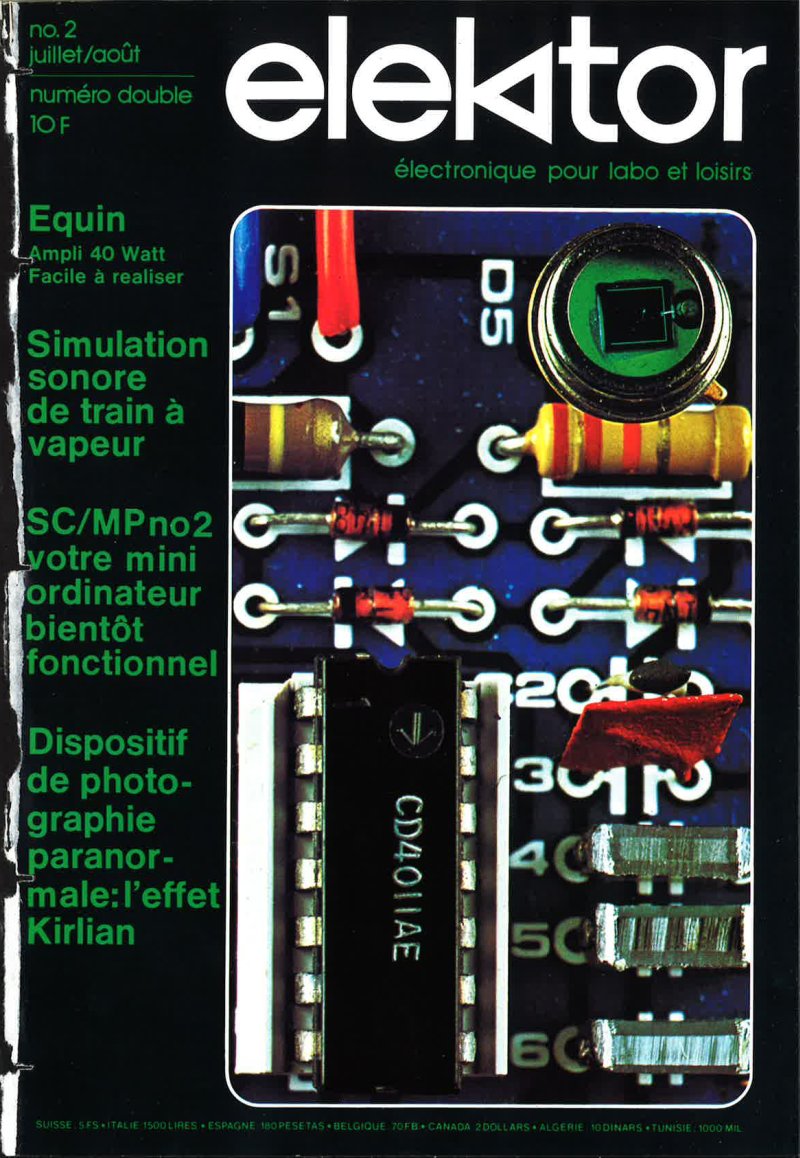
ELEKTOR No. 002 - juil-aout 1978
ELEKTOR magazine issue 002 from July-August 1978 — a comprehensive French electronics publication for hobbyists and technicians working with analog audio and microprocessor circuits. This issue delivers practical construction projects including a 40-watt Hi-Fi amplifier (Equin), microphone preamplifier designs for electret capsules, and foundational signal analysis tools like a signal tracer and local FM receiver. Beyond audio, you'll find specialized circuits for Kirlian photography apparatus, steam train sound simulation, vapor whistle effects, and a printed stylus force gauge for turntable setup. The microprocessor section continues SC/MP programming tutorials, making this valuable reference material for learning assembly language on this classic 8-bit processor. Comprehensive component sourcing support includes detailed price lists for integrated circuits, transistors, diodes, and a full directory of electronics suppliers serving France and Belgium. Whether you're building a workshop reference collection or need guidance on vintage analog and early microcomputer projects, this technical magazine PDF offers the schematic detail and parts information you need. A window into 1970s European electronics culture when hobbyists regularly built their own equipment from published designs.
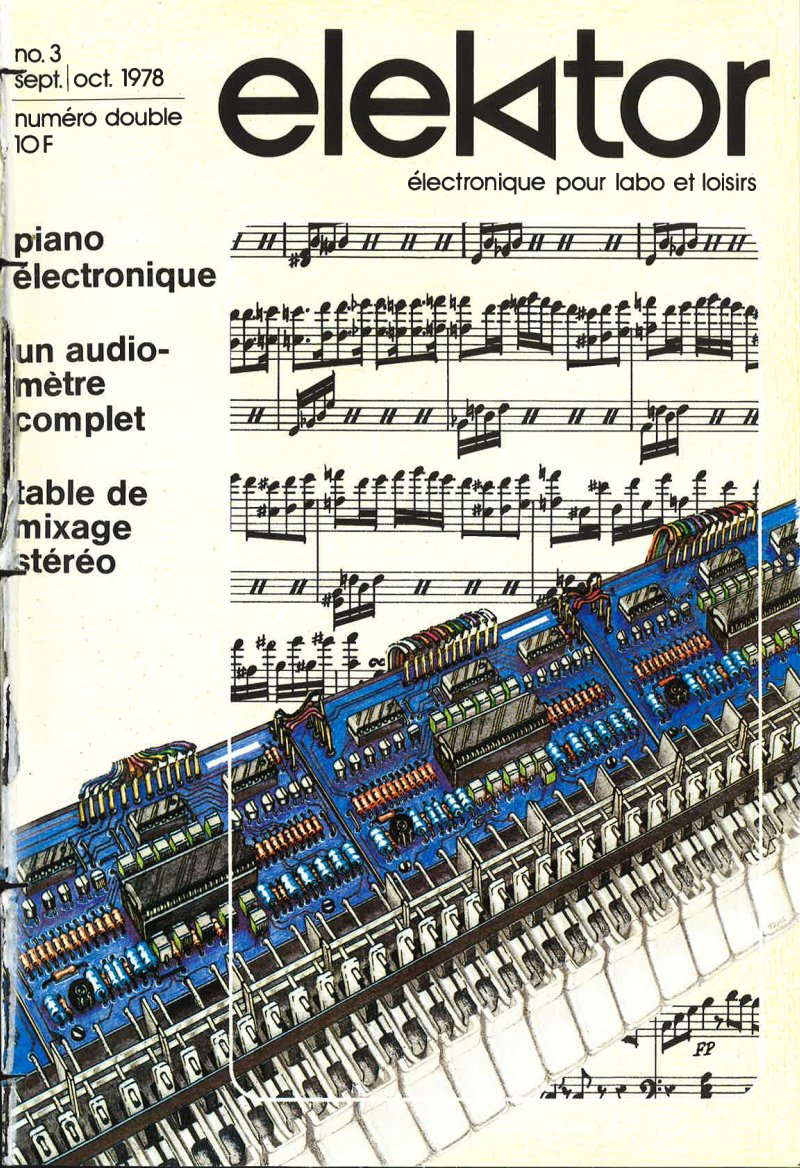
ELEKTOR No. 003 - sept-oct 1978
ELEKTOR magazine issue 003 from September-October 1978 covering a diverse range of practical electronics projects and technical content. This issue includes a stereo mixing table designed for discotheque use, a peak audio-frequency voltmeter with logarithmic scale, and a universal note generator for electronic piano and organ circuits. Featured projects span from a modular electronic piano build to a TTL logic tester, a square wave to staircase converter, and an FM transmitter pen design. The issue also provides part three of the SC/MP microprocessor tutorial series, semiconductor product announcements, and pricing from major European electronics suppliers including Magnetic-France, BERIC, TEVELABO, Selectronic, Elektronikladen, and Fanatronic. Additional highlights include an LED voltmeter using the UAA 180 chip, a lighting fault indicator, a TUP-TUN tester, and the Elektor Software Service section. This magazine serves as both a reference resource and a hands-on guide for electronics enthusiasts and technicians working with audio circuits, logic systems, and microprocessor applications during the late 1970s computing era.
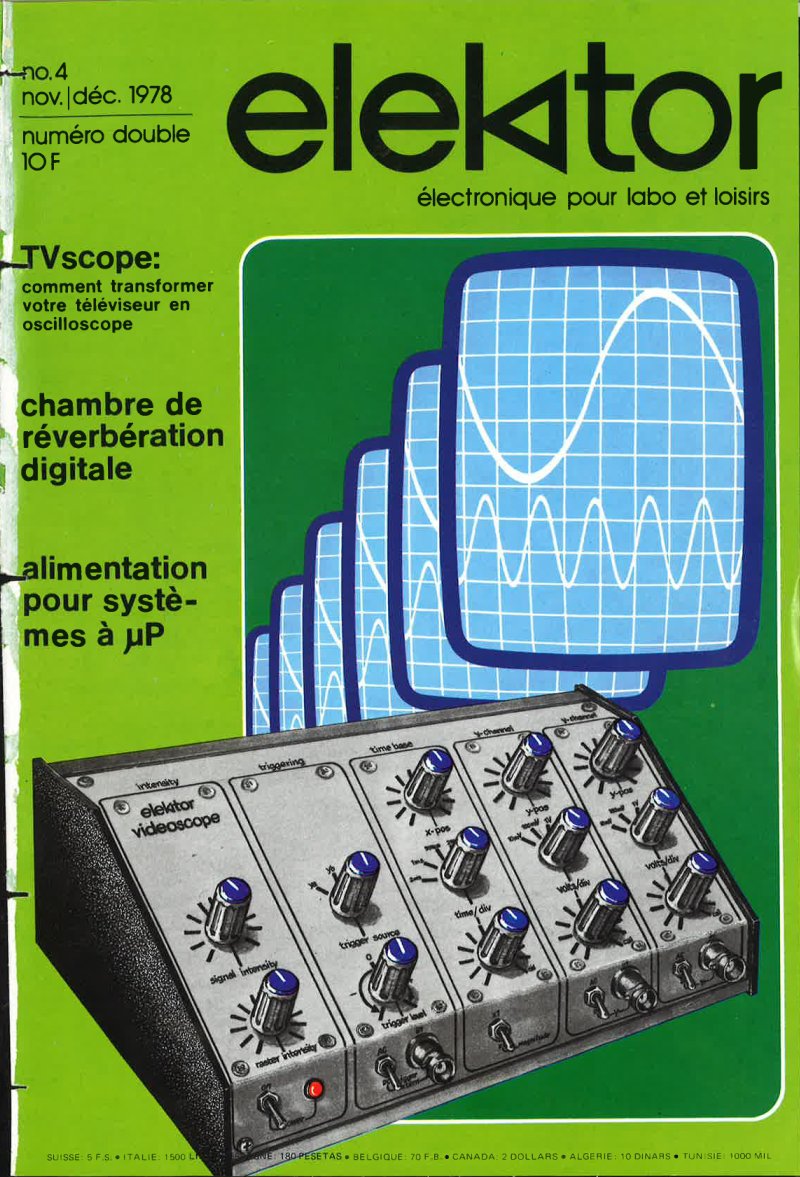
ELEKTOR No. 004 - nov-dec 1978
ELEKTOR magazine issue 004 from November–December 1978 brings together practical electronics projects and technical tutorials for hobbyists and technicians working with microprocessor systems and analog circuits. The issue opens with foundational guidance on printed circuit board design and soldering technique, then progresses through RAM experiments and a 4K memory card build, establishing core concepts before advancing to more ambitious projects. Standout features include a detailed TV-scope conversion guide—both introductory principles and a working base station design—that transforms a television into a functioning oscilloscope for workshop use. A digital reverberation chamber project demonstrates real-world audio signal processing, while dedicated coverage of the SC/MP microprocessor includes programming essentials for beginners. Practical builds cover a bicycle speed counter, optical combination lock mechanism, logarithmic exposure timer, marble game circuit, compact frequency meter, and VHF/UHF TV modulator. A power supply design tailored for microprocessor systems addresses a common design challenge of the era. The magazine includes full schematic diagrams and component listings for each project, supported by the EPS printed circuit board catalog for sourcing ready-made boards. Period advertisements from European electronics suppliers round out the technical reference value. This issue captures the spirit of hands-on electronics experimentation in the late 1970s, when hobbyist-grade microprocessor projects were becoming accessible to individual makers.
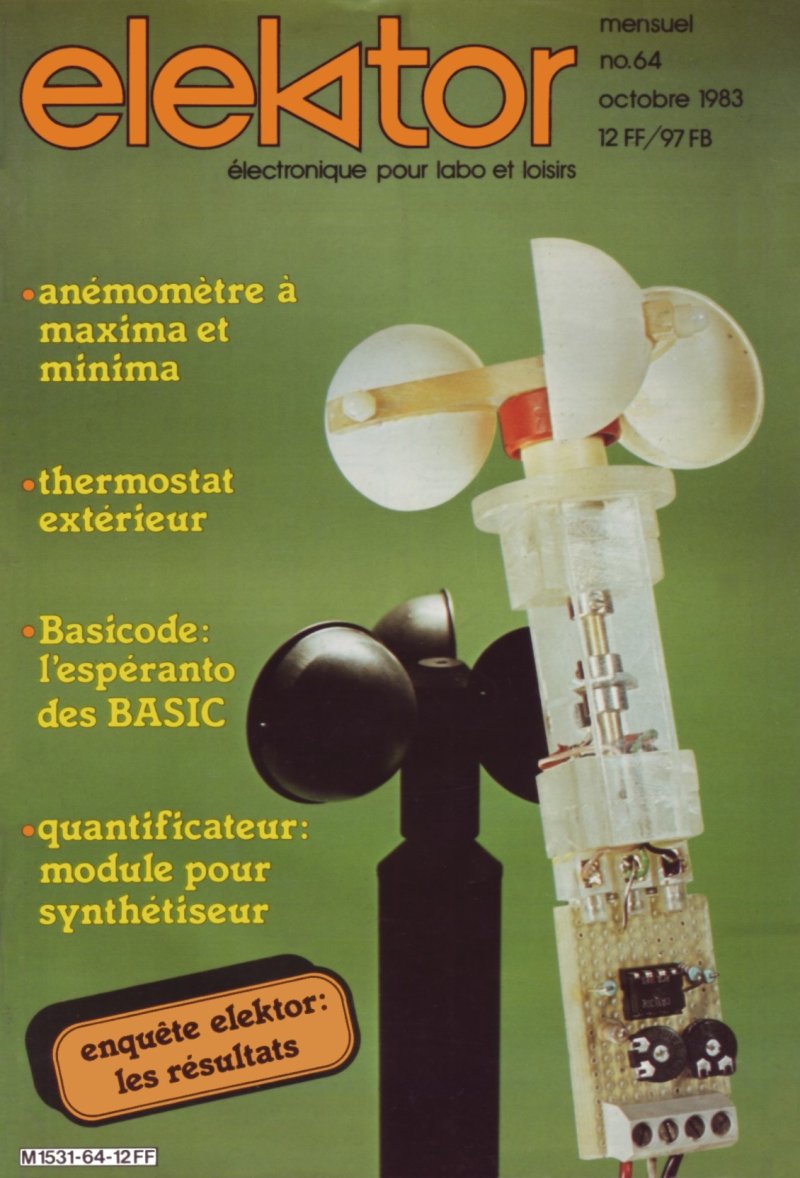
ELEKTOR No. 064 - oct 1983
This October 1983 issue of Elektor magazine is a hands-on electronics publication for hobbyists and laboratory technicians. The opening feature explores infrared technology in depth, followed by a diverse selection of projects covering power electronics, signal conditioning, and programmable systems. Key articles include a design for a transistorized voltage regulator for automotive alternators, an external thermostat circuit for temperature control, and a weather station anemometer for wind measurement. Readers will find detailed construction guides for an FSK signal conditioning circuit used in data recovery applications, a programmable power supply, and an encoder circuit. The issue continues the Junior Computer project series (part 2), covers Basicode programming concepts, and includes an antenna switch design. Additional content covers a deprogrammer circuit requiring no dedicated interface hardware, a mains adapter project, and free printed circuit board layouts. The publication concludes with an Elektor reader survey and market analysis section. A practical reference for electronics enthusiasts working on circuit design, embedded systems, and DIY electronics projects.