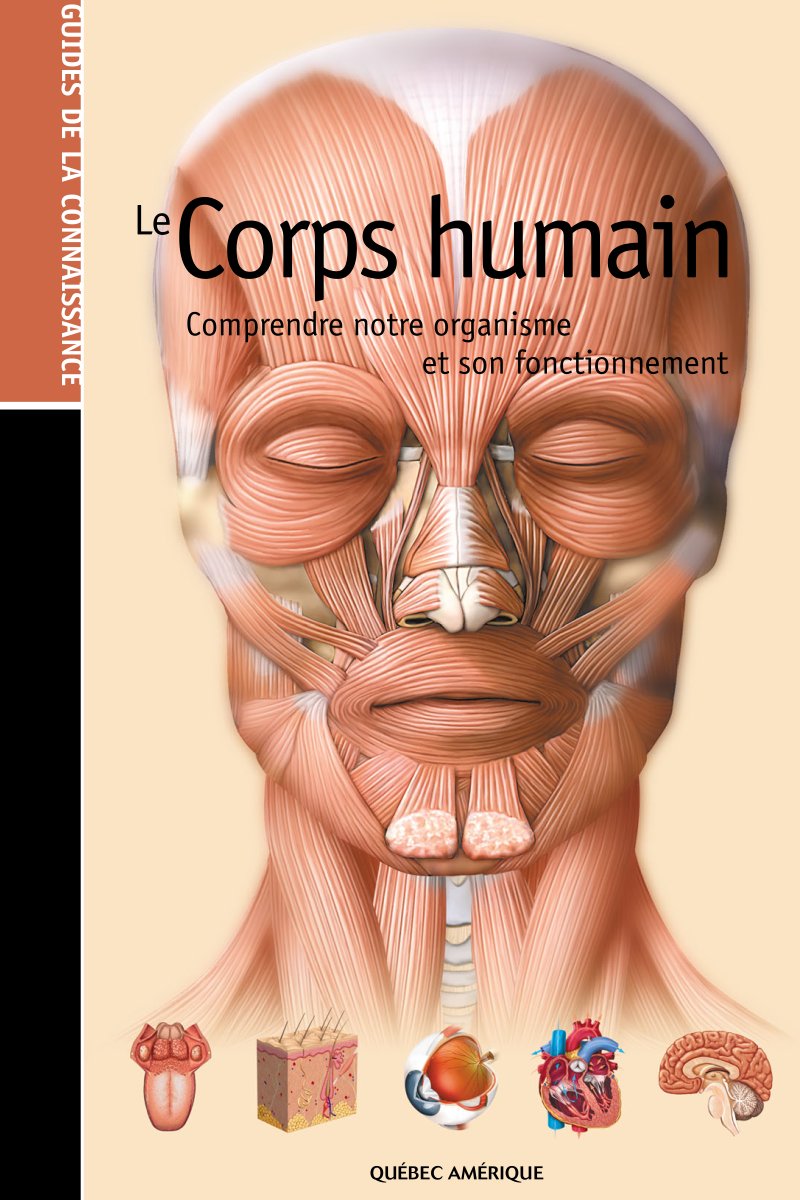
The Human Body: Understanding Our Organism and Its Functioning
A comprehensive illustrated reference guide to the complete structure and functioning of the human body, covering anatomy and physiology across all levels of biological organization. This educational resource begins with the fundamental units of life—the approximately 60 trillion cells that make up the human organism—examining their structure, genetic material contained in chromosomes and DNA, and metabolic activities. The guide then systematically explores the body's major structural and functional systems: the skeletal system, muscular system, and joints, followed by the skin as the body's largest organ. Moving deeper into systemic function, it covers the nervous system with detailed examination of neurons and brain architecture, sensory mechanisms of vision, hearing, taste, smell, and touch, the circulatory and lymphatic systems responsible for transport and immunity, the mechanics of respiration, and the digestive system's role in nutrition and metabolism. Additional sections address the endocrine system for hormonal regulation, the urinary system for waste elimination, and human reproduction including embryonic development and prenatal physiology. Throughout, detailed anatomical illustrations, cross-sections, and functional diagrams demonstrate how individual organs integrate within their respective systems and how all systems work together to maintain homeostasis. Developed under the guidance of QA International with medical expertise, this reference serves as an authoritative foundation for understanding how the human body operates at every scale.
Table of Contents:
- The matter of the body .... 6
- The human cell .... 8
- Chromosomes and DNA .... 10
- Cellular activity .... 12
- Body tissues .... 14
- The architecture of the body .... 16
- The skin .... 18
- Bone structure .... 20
- Bone growth .... 22
- The human skeleton .... 24
- Types of bones .... 26
- The head .... 27
- The spinal column .... 28
- The hand and foot .... 30
- Joints .... 32
- Skeletal muscles .... 34
- Muscle tissue .... 36
- Muscles of the head .... 38
- Action of skeletal muscles .... 40
- Hand movements .... 41
- The nervous system .... 42
- Neurons .... 44
- The central nervous system .... 46
- The encephalon .... 48
- The brain .... 50
- The peripheral nervous system .... 52
- Motor functions of the nervous system .... 54
- The five senses .... 56
- Touch .... 58
- The eye .... 60
- Vision .... 62
- Organs of hearing .... 64
- Sound perception .... 66
- Balance .... 67
- Taste .... 68
- Taste receptors .... 70
- Smell .... 72
- Blood circulation .... 74
- Blood .... 76
- The cardiovascular system .... 78
- Arteries and veins .... 80
- The heart .... 82
- The cardiac cycle .... 84
- The lymphatic system .... 86
- Immunity .... 88
- The endocrine system .... 90
- The hypothalamus and pituitary gland .... 92
- The urinary system .... 94
- Respiration and nutrition .... 96
- The respiratory system .... 98
- Respiration .... 100
- Speech .... 102
- The digestive system .... 104
- Teeth .... 106
- The stomach .... 108
- The intestines .... 109
- The liver, pancreas and gallbladder .... 110
- Reproduction .... 112
- Male reproductive organs .... 114
- Female reproductive organs .... 116
- Fertilization .... 118
- Embryonic life .... 120
- Maternity .... 122
- Glossary .... 124
- Index .... 126
Documentation must be downloaded on a computer (PC, Mac, or Linux).
Do not use a smartphone or tablet to download documentation; they generally lack sufficient memory capacity to handle large files, and few users know how to locate the download folder on these devices.
Once downloaded, you can use it right away and even print the pages you need, or use your smartphone in photo mode to translate into the language of your choice: Google Translate
Document Details
- Format
- Pages
- 130
- Size
- 17.1 MB
- Category
- Society & Culture